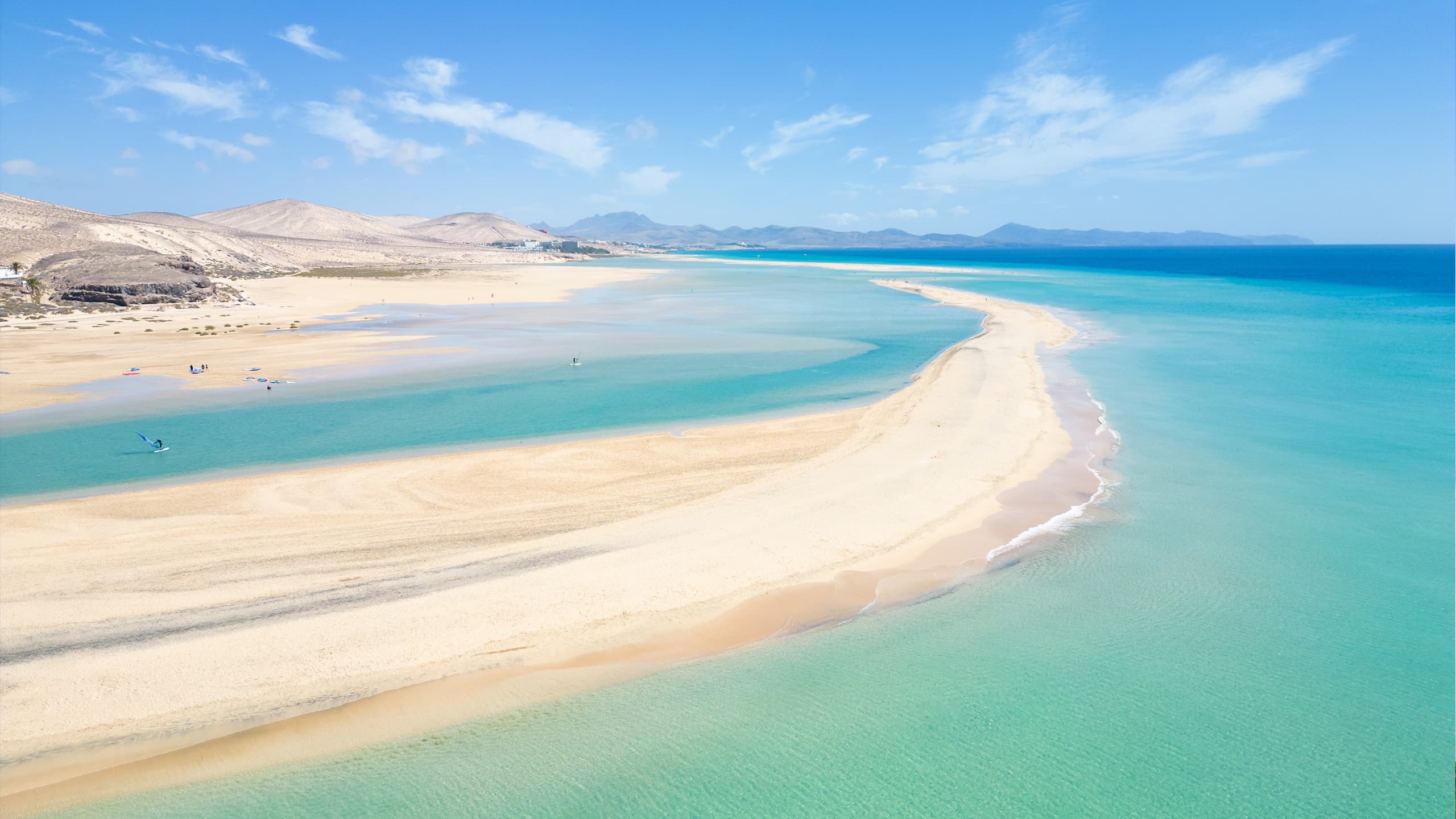
Endless beaches and crystal clear waters
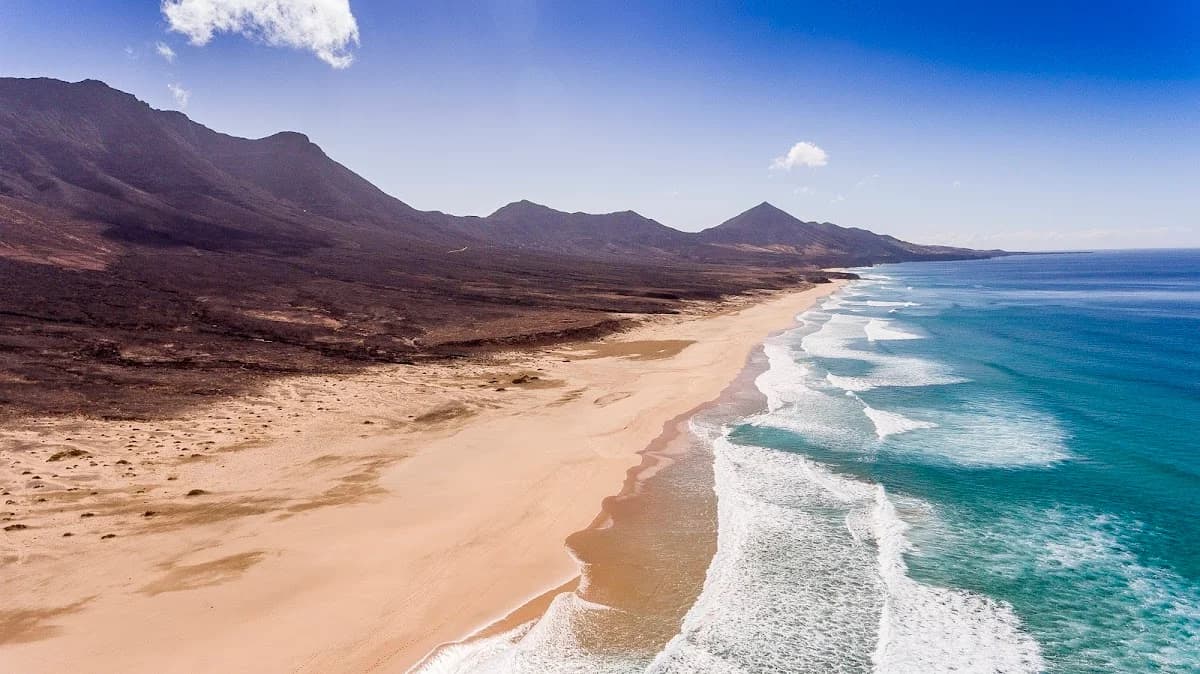
The paradise of windsurf and kitesurf, with endless white sand beaches and turquoise waters.
Geography
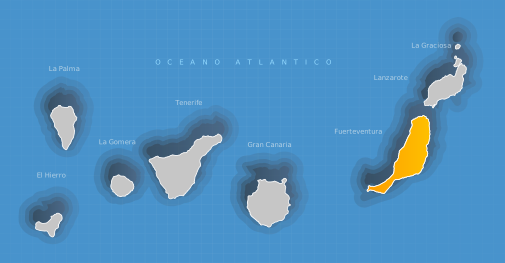
Fuerteventura, the largest island in the Canary Islands after Tenerife, is located at the eastern end of the archipelago, close to the African coast.
Explore the island
7 municipalities
Hover over the map to discover Fuerteventura's municipalities. Click to see what to do in each one.
The oldest island
At more than twenty million years old, Fuerteventura is the elder of the archipelago. Time and wind have worn its volcanoes down into a plain of open horizons and unusually clear skies.
Corralejo Natural Park protects a dune field of over two and a half thousand hectares made of organic sand: shells and calcareous skeletons ground down by the sea over millennia and then carried inland by the trade winds. Unlike other deserts, this system is alive and in constant motion, its pale colour contrasting with the dark cones of the badlands that border it.
Off that coast rises the islet of Lobos, barely six square kilometres with no roads or accommodation and access capped by a daily quota. It takes its name from the monk seal colonies that lived there until their local extinction, and today shelters seabirds and salt-tolerant vegetation of considerable botanical value.
Inland stands Tindaya Mountain, a trachyte massif with reddish tones held sacred by the ancient Majos. Its slopes preserve more than two hundred podomorph engravings — human footprint outlines carved into the rock — most of them facing west, where on clear days the silhouette of Teide appears on the horizon.
The absence of high relief and light pollution has made Fuerteventura a Starlight Reserve and a natural observatory of the night sky. The entire island was declared a Biosphere Reserve in 2009, and its coastal waters hold seagrass meadows that are essential for sea turtles and for the breeding of numerous fish species.
Contrasting Coasts
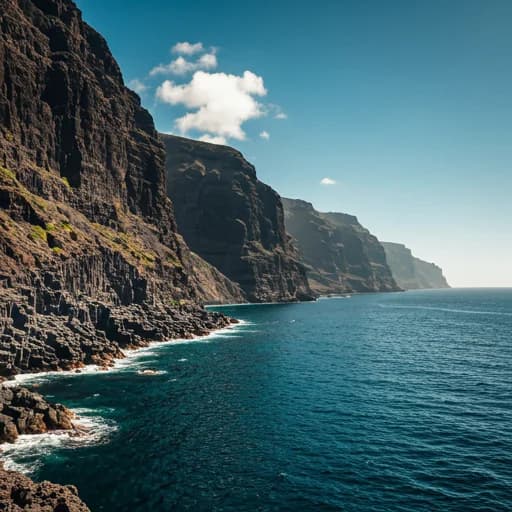
From the wild black sands of the north to the golden calm waters of the south. The Atlantic in all its facets.
Where the conquest began
Fuerteventura is where the archipelago's first capital was founded. Its inland villages preserve churches, manor houses and windmills that speak of a farming island long left to itself.
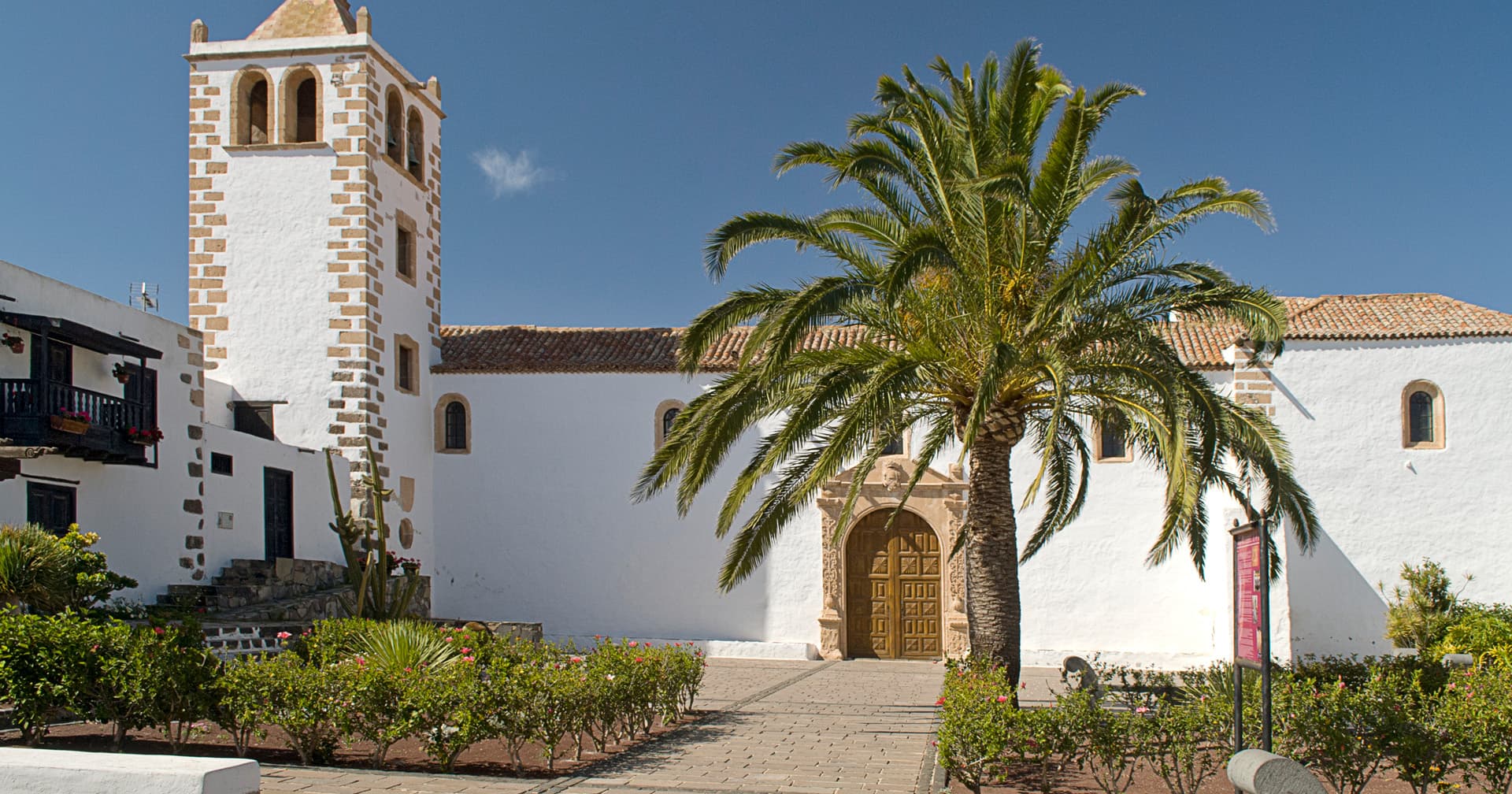
Founded in 1404, it was the first capital of the Canaries and seat of the bishopric.
Explore →
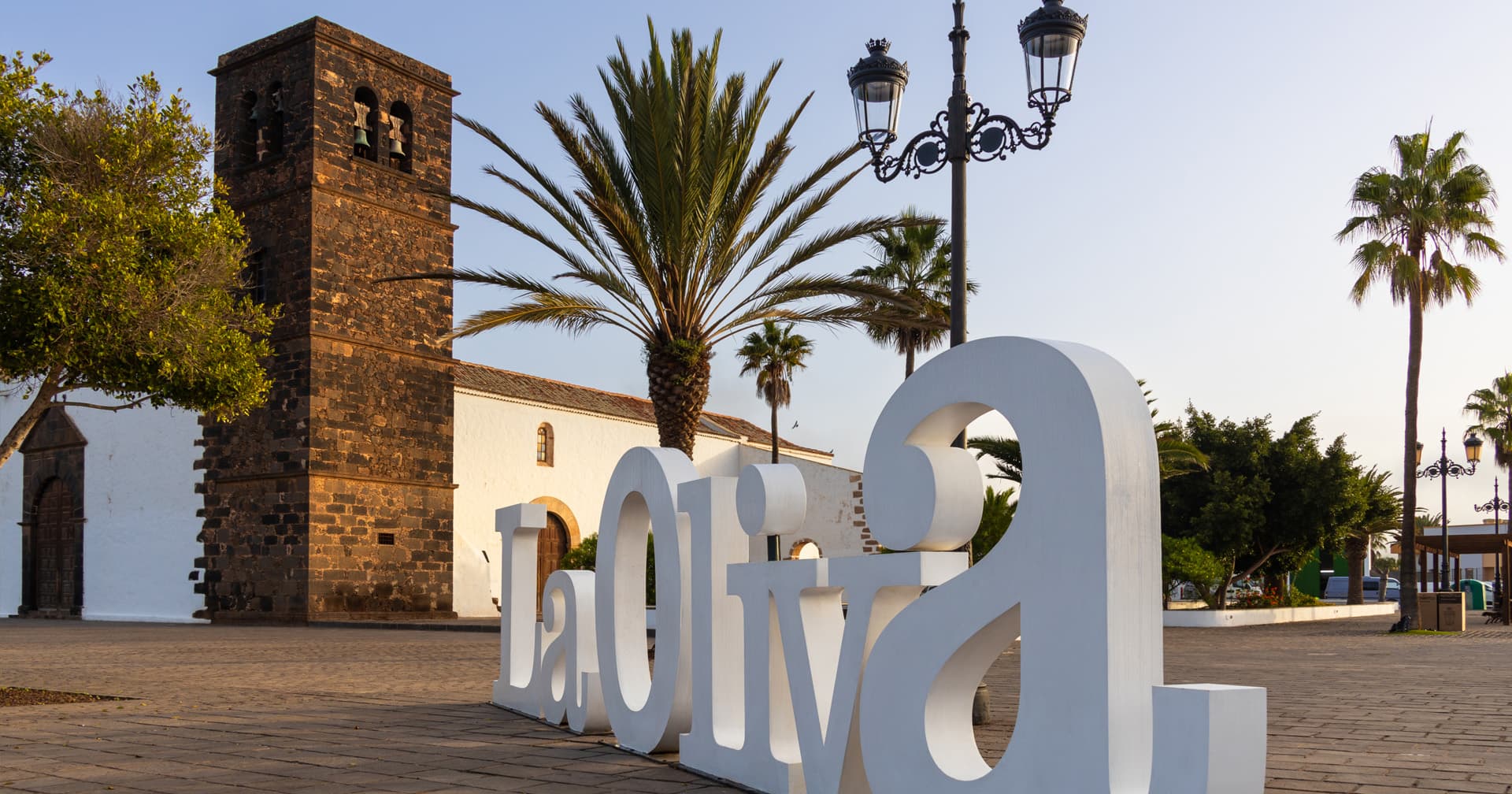
An 18th-century mansion and symbol of the military power that ruled the island.
Explore →
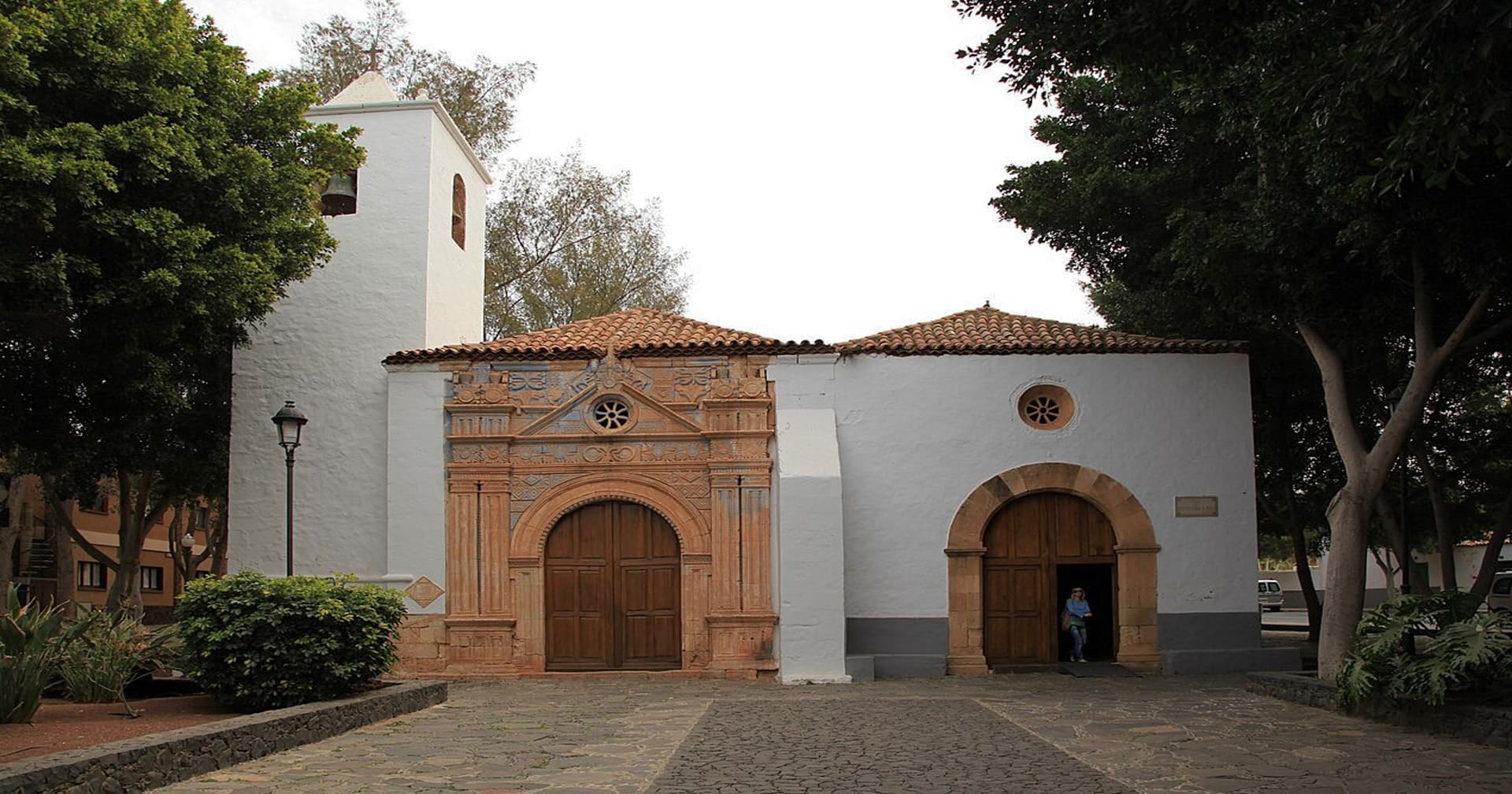
A 17th-century church whose carved doorway has no parallel in the archipelago.
Explore →
Betancuria was founded in 1404 by the Norman Jean de Béthencourt, who chose an inland valley hidden from the sea to guard against surprise attacks. It served as the island capital until 1834 and as the seat of the first bishopric in the Canaries. The strategy did not always work: in 1593 a Berber raid destroyed the town and the church of Santa María, which had to be rebuilt on its own ruins.
La Oliva is home to the Casa de los Coroneles, residence of the military commanders who governed Fuerteventura in near-feudal fashion for more than a century. Its two-storey façade, with corner towers and dozens of wooden balconies, is the finest example of 18th-century civil architecture in the islands. A few steps away, the church of La Candelaria preserves a Mudéjar coffered ceiling and paintings attributed to Juan de Miranda.
The church of Nuestra Señora de Regla in Pájara holds one of the most debated puzzles in Canary heritage: a stone doorway carved with suns, serpents, birds and geometric figures whose iconography has been linked to Mesoamerican art. No consensus exists on its origin, and that ambiguity has fuelled the curiosity of historians and visitors for decades.
Beyond the historic towns, the island's heritage is above all rural. The windmills that grind grain for gofio, the dry-stone enclosures, the gambuesas where free-roaming livestock is gathered during the traditional round-ups, and the lime kilns at sites such as Tostón trace the memory of an island that lived from farming and the sea well into the 20th century.
Unique Flavors
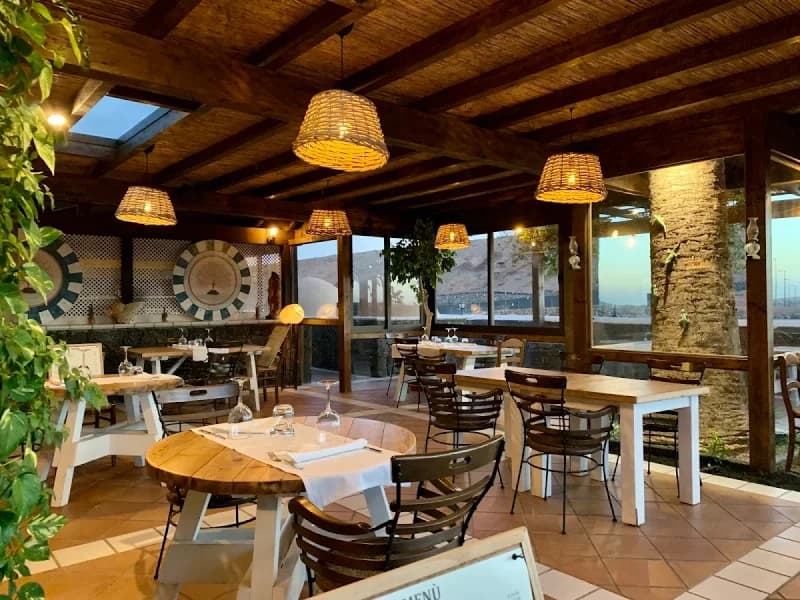
The gastronomy of Fuerteventura is characterized by its cheeses, especially the majorero, which is one of the most famous in the Canary Islands. Gofio, wrinkled potatoes with mojo and fresh fish are also very typical. The majorera cuisine is simple, but closely linked to the quality of local products.
The island has a strong livestock tradition, and this is very noticeable in its gastronomy. Goat cheese is one of its great emblems, and it appears in both savory dishes and more elaborate recipes. Seafood is also widely consumed, which complements the inland cuisine very well.
Fuerteventura preserves a traditional cuisine that reflects its dry climate and its history of effort and adaptation. Its dishes are usually homemade, nutritious and very representative of island life. Eating on the island is also a way to get to know its cultural identity.
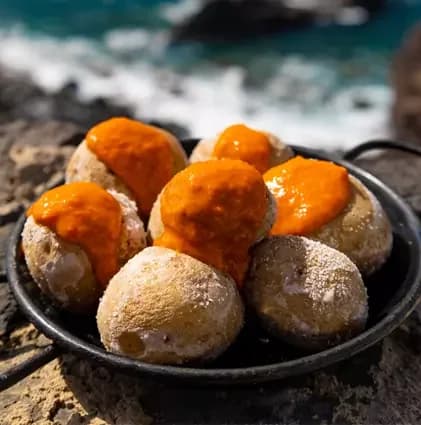

Volcanic Flavor
Most popular
Fuerteventura is an island to be lived intensely, especially if you love sport and outdoor adventure. Its vast beaches, crystal-clear waters, and unique natural conditions make it a paradise for surfing, kitesurfing, and windsurfing.
Must-see places