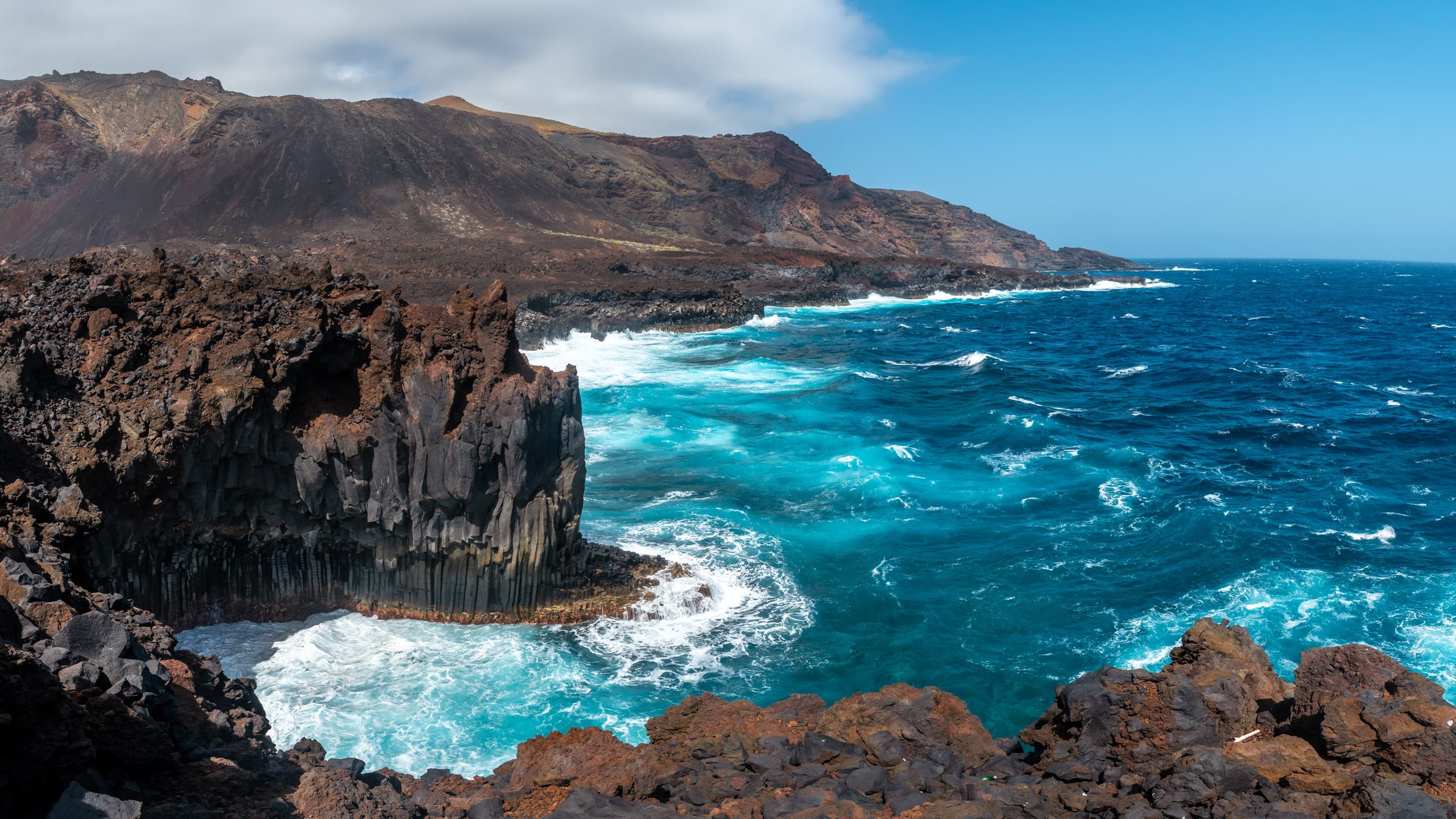
Pure nature far from noise
The smallest and southernmost island of the Canary Islands.
Geography
The smallest and westernmost island of the Canary archipelago. A territory of unique beauty and biodiversity, declared a Biosphere Reserve by UNESCO in 1997.
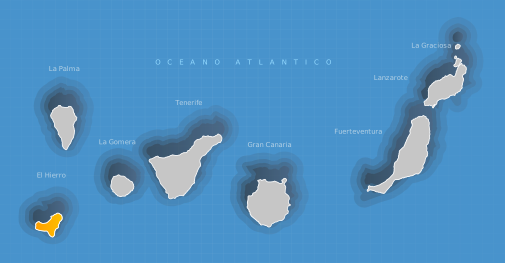
Explore the island
3 municipalities
Hover over the map to discover El Hierro's municipalities. Click to see what to do in each one.
The end of the known world
For centuries, El Hierro marked the western edge of the world. Today it is a UNESCO Global Geopark and a laboratory of sustainability aiming to run entirely on renewable energy.
Mar de las Calmas, on the south-western side, was among the first marine reserves declared in Spain. The near-total absence of swell, the vertical drop of the seabed and a steady water temperature produce exceptional clarity and an uncommon concentration of life: groupers, moray eels, rays and shoals of barracuda gather within metres of the shore, in a spot rated among the finest dive sites in Europe.
At La Dehesa, the juniper grove of El Sabinar offers one of the archipelago's most recognisable images. Subjected for centuries to the constant push of the trade winds, these trees have grown twisted and arched until their crowns touch the ground, becoming a symbol of adaptation to the wind.
Off the El Golfo valley rise the Roques de Salmor, the last natural refuge of the El Hierro giant lizard. Believed extinct for decades, it was rediscovered in 1974 on the Tibataje cliffs and is now recovering through a captive breeding programme. It can exceed sixty centimetres in length and is one of the most endangered reptiles in Europe.
Declared a Biosphere Reserve in 2000 and a Global Geopark in 2014, the island has turned its isolation into an advantage. The Gorona del Viento wind-hydro plant combines turbines with two reservoirs at different altitudes to store energy, allowing clean sources to cover much of the island's electricity demand.
Contrasting Coasts
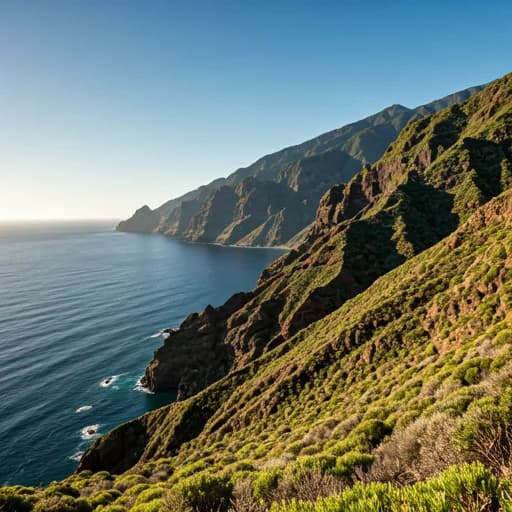
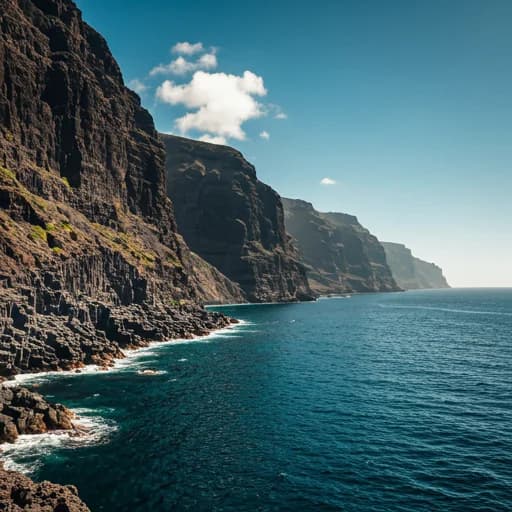
From the wild black sands of the north to the golden calm waters of the south. The Atlantic in all its facets.
Bimbache memory
El Hierro preserves the mark of the Bimbaches in its rock carvings, and a devotion that stirs only once every four years, when the entire island walks together.
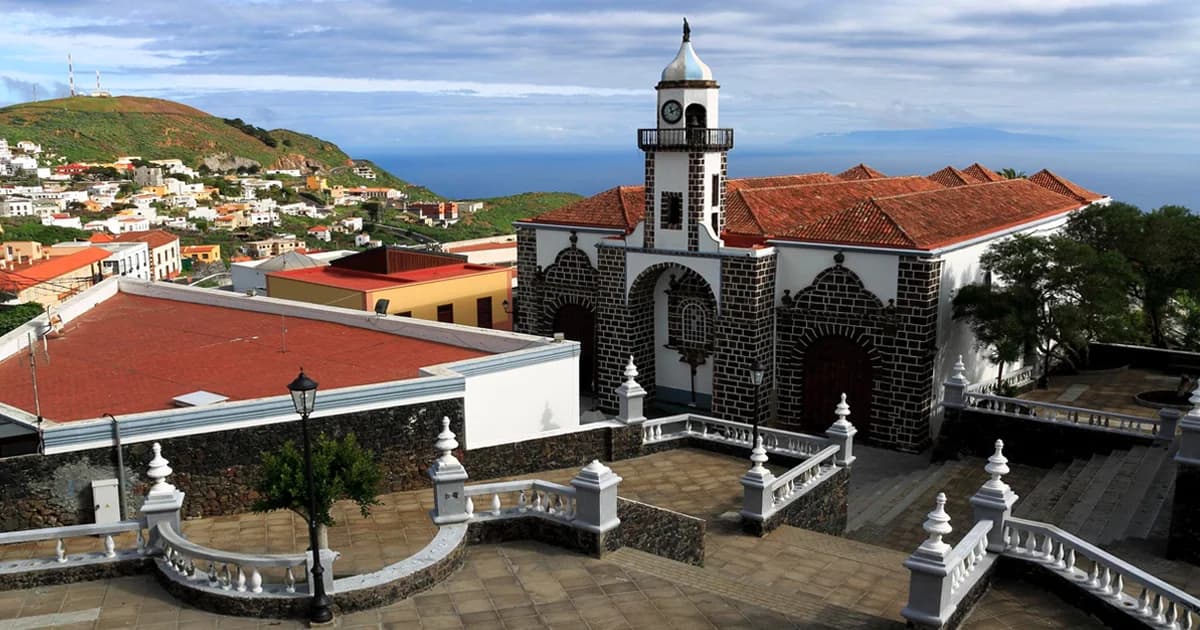
The only Canary island capital built away from the coast, out of reach of pirates.
Explore →
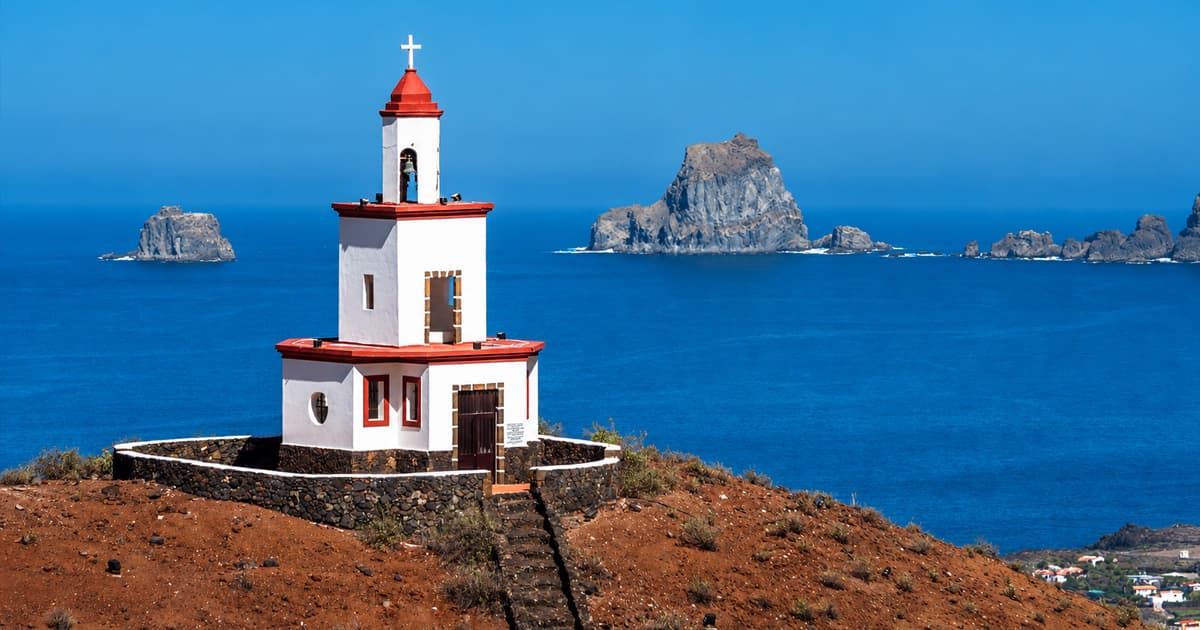
The La Dehesa shrine, starting point of the archipelago's longest pilgrimage.
Explore →
An archaeological site with rock inscriptions left by the island's first inhabitants.
Explore →
Valverde is the only island capital in the Canaries that does not face the sea. Its position above five hundred metres and set back from the coast follows the same defensive logic that placed Betancuria inland on Fuerteventura: to avoid surprise landings. Its church of Santa María de los Reyes, with a free-standing bell tower, presides over a compact centre of narrow streets and two-storey houses.
Every four years the island celebrates the Bajada de la Virgen de los Reyes, documented since the mid-18th century as thanksgiving for the end of a prolonged drought. The image is carried on shoulders along the twenty-eight kilometres of the Camino de la Virgen, from the shrine at La Dehesa to Valverde, accompanied by dancers and musicians from every village in a day that draws virtually the whole island population.
On the southern slope, the El Julan site holds the island's most important collection of rock carvings. Hundreds of signs and lines attributed to the Bimbaches appear across the basalt flows, among them Libyco-Berber inscriptions that remain undeciphered. Nearby lie the remains of a tagoror, the space where the community council gathered.
El Hierro's heritage is completed by features on a domestic scale: the wells and cisterns that resolved centuries of water scarcity, the transhumant grazing system between coast and highlands, and the memory of the Garoé, the tree that according to the chronicles condensed mist on its leaves and supplied the population before the conquest.
Unique Flavors
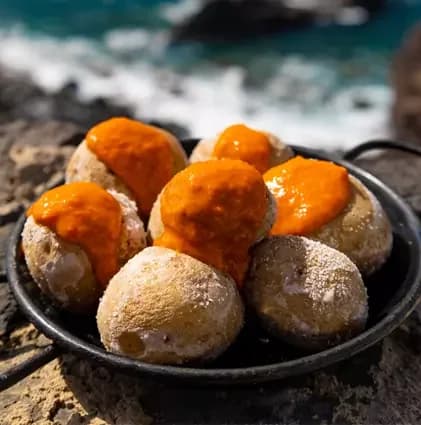
The gastronomy of El Hierro is small in variety, but very rich in tradition and quality. One of its most famous products is Hierro cheese, made artisanally and highly valued both inside and outside the island. Gofio, potatoes, and fresh fish are also important.
Hierran cuisine relies heavily on simplicity and making the most of local resources. Like on other islands, mojos accompany many dishes, and the recipes tend to be homemade and full of flavor. The relationship with the sea is very important, especially in coastal areas.
El Hierro has managed to preserve an authentic cuisine, without great frills. Its artisanal products, especially cheese and some fish, are an essential part of its identity. Eating on the island means discovering a simple but very representative cuisine.

Volcanic Flavor
Most popular
El Hierro is not just to be admired, it is to be lived. It is an ideal destination for lovers of hiking, diving, cycling and nature in its purest state.
Must-see places
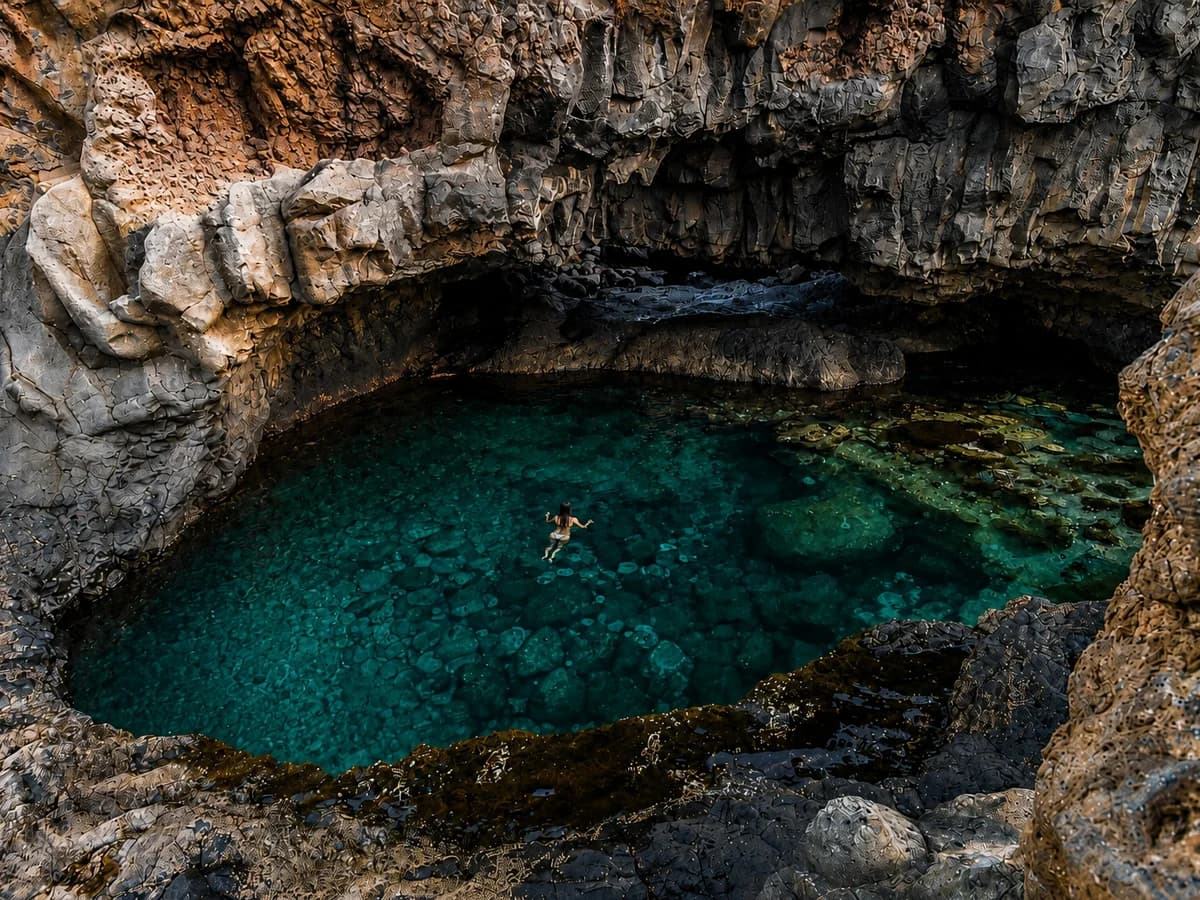
Discover 15 must-visit places in El Hierro: breathtaking viewpoints, natural pools, twisted juniper trees, and the ancient edge of the world.
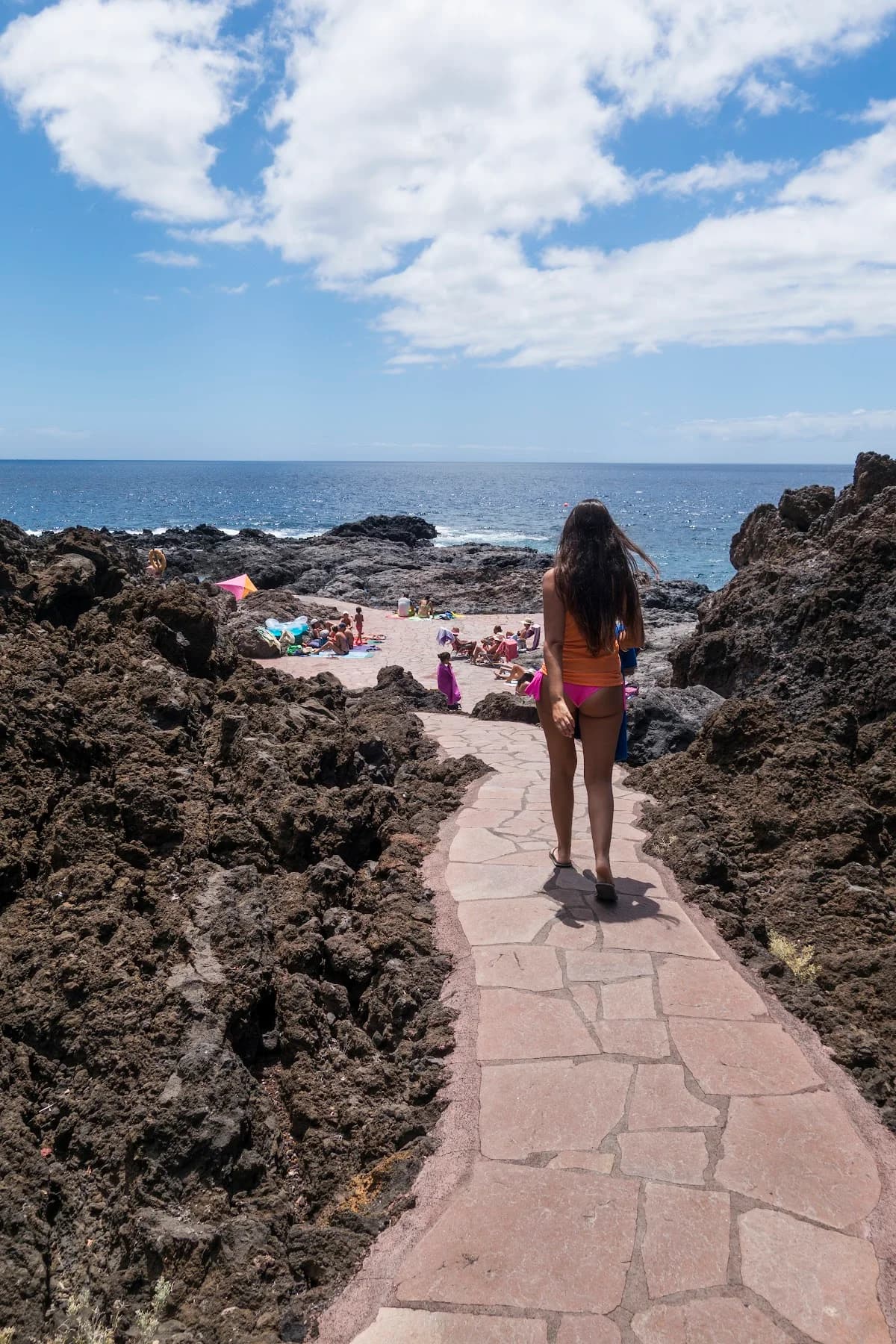
Discover the best beaches in El Hierro, from volcanic black sands to natural pools. Your complete guide to this UNESCO Biosphere Reserve's coastal treasures.


