Magic ravines and ancient forests
La Gomera is a natural jewel. A whisper of laurel forest, a labyrinth of ravines and the 'silbo gomero', an ancestral language.
Geography
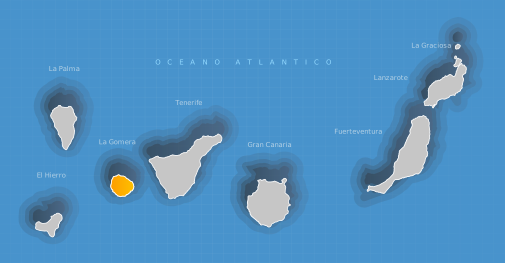
La Gomera, small and mountainous, sits in the west of the archipelago, west of Tenerife. It is the oldest island, with reliefs that show its volcanic origin.
Explore the island
6 municipalities
Hover over the map to discover La Gomera's municipalities. Click to see what to do in each one.
A forest from the Tertiary
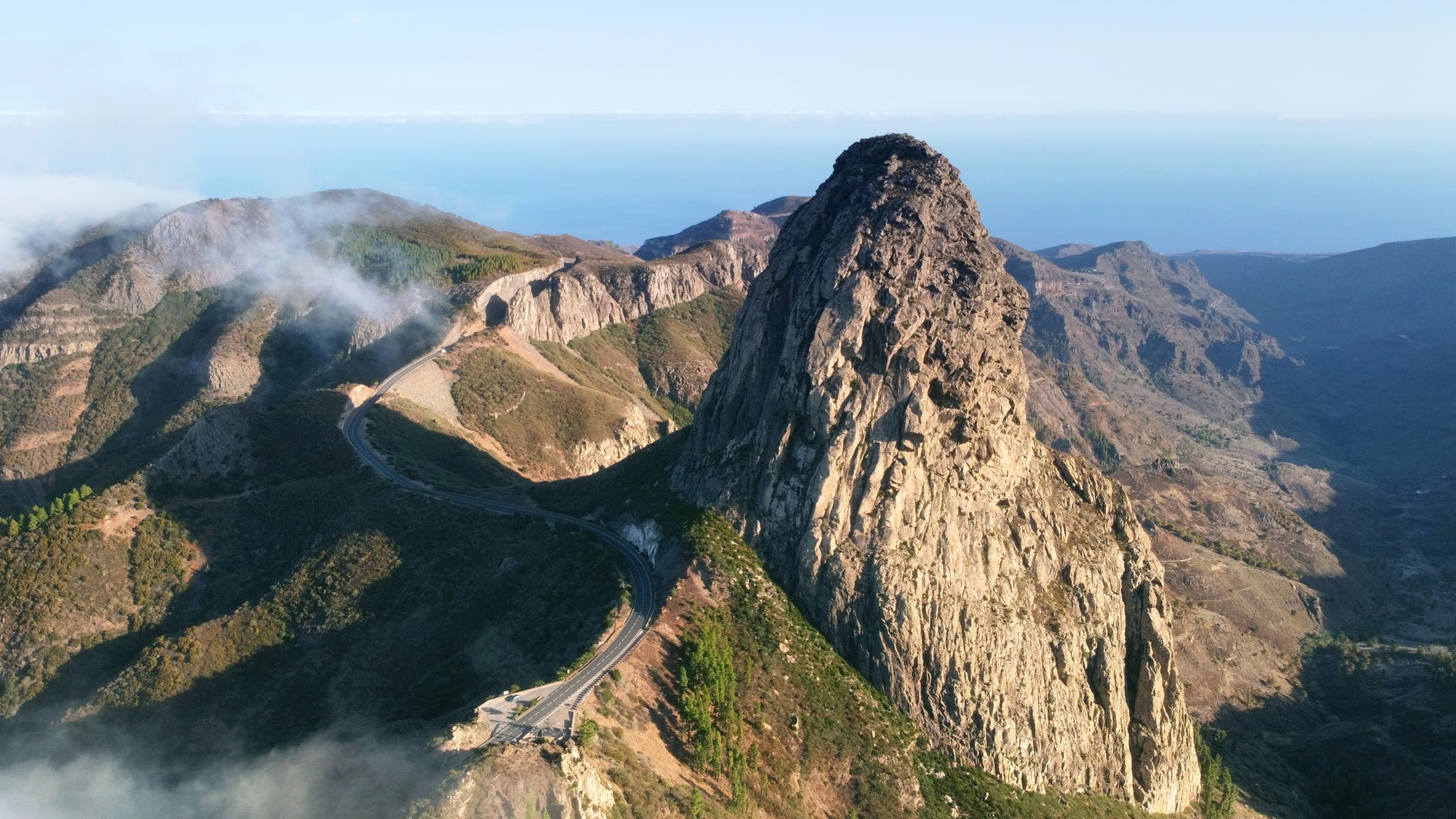
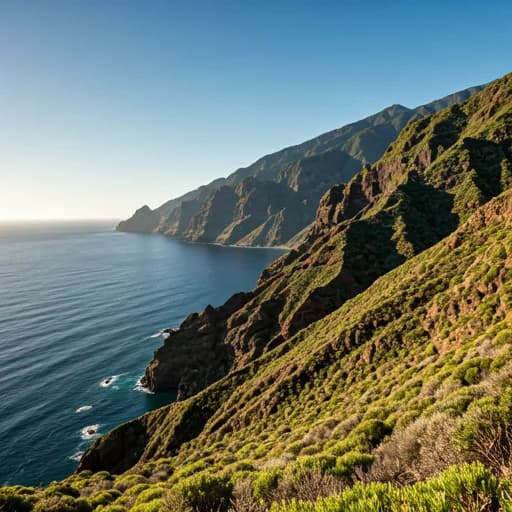
La Gomera preserves the largest and best-conserved laurel forest in the world. With no recent volcanic activity, erosion has carved an island of radial ravines and bare rock spires.
Garajonay National Park was declared a World Heritage Site in 1986 for holding the most representative example of Canary laurel forest. This cloud forest, dominated by laurels, viñátigos and moss-covered heather, is a direct remnant of the subtropical jungle that once spread across southern Europe before the ice ages. Beneath its canopy little light penetrates and humidity stays constant year-round.
The island's structure is a textbook case of radial erosion: ravines descend from the central plateau towards the sea, opening deep and isolated valleys. That extreme relief explains the origin of silbo gomero, a whistled language that reproduces Spanish and allowed people to communicate from one hillside to another. UNESCO inscribed it as Intangible Cultural Heritage in 2009.
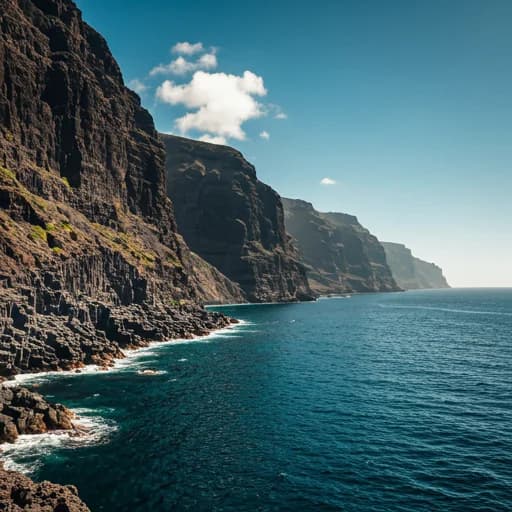
On the north coast, reachable only by sea, the Los Órganos cliffs display an imposing set of vertical basalt columns formed by the slow cooling of an ancient volcanic dome later dismantled by the waves. The result resembles the pipes of an organ standing more than eighty metres tall.
The whole island was declared a Biosphere Reserve in 2012. Among its valleys, Valle Gran Rey retains the terraces and palm groves that sustained centuries of subsistence farming based on the Canary palm, from which palm honey is still produced through the tapping of guarapo sap.
Contrasting Coasts
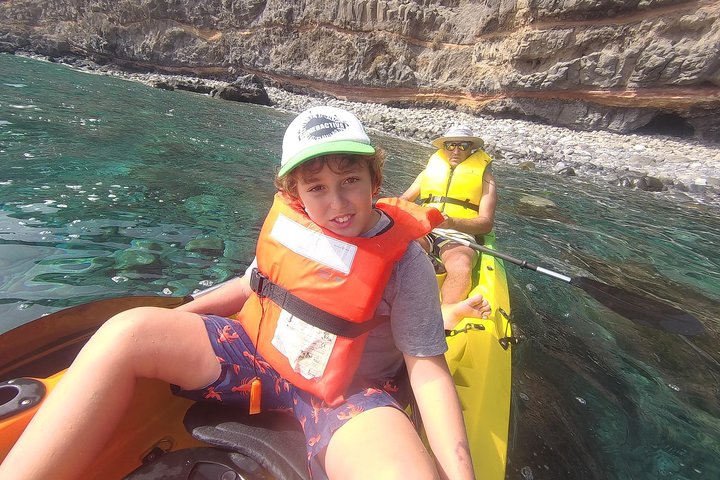
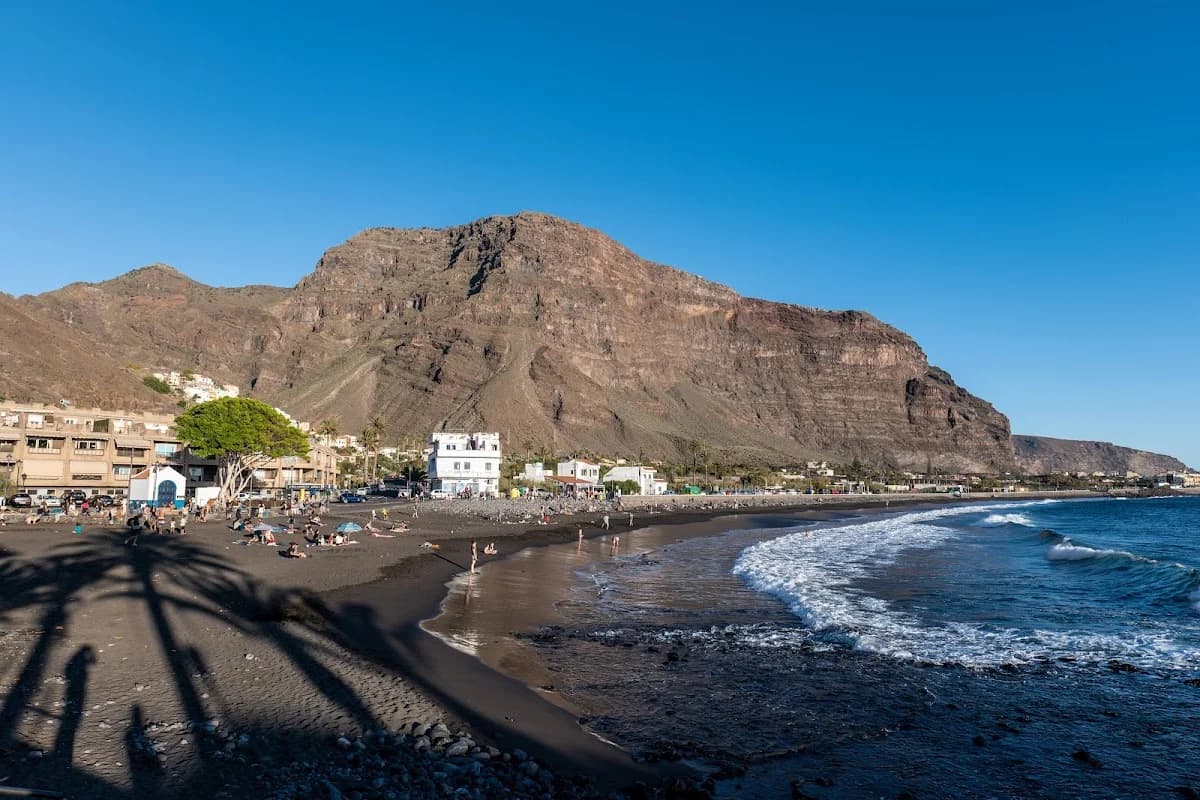
From the wild black sands of the north to the golden calm waters of the south. The Atlantic in all its facets.
The Columbus island
It was from La Gomera that Columbus sailed into the unknown. The island preserves that past alongside skills no other place keeps: a whistled language and pottery made without a wheel.
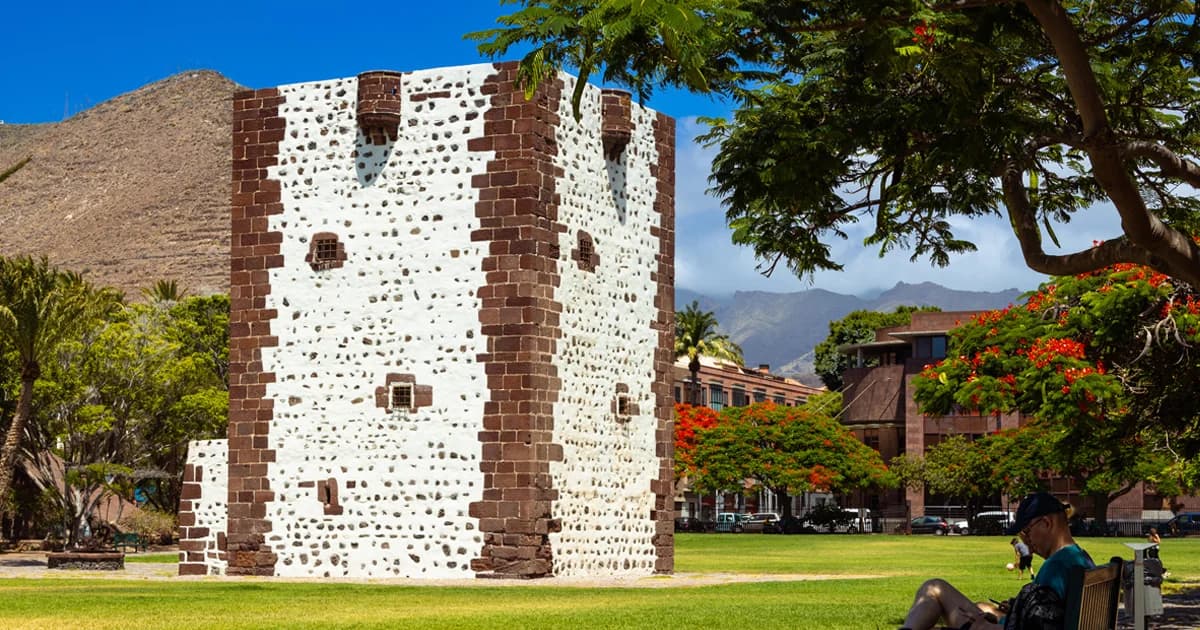
The last European port before the 1492 voyage, with the Torre del Conde still standing.
Explore →
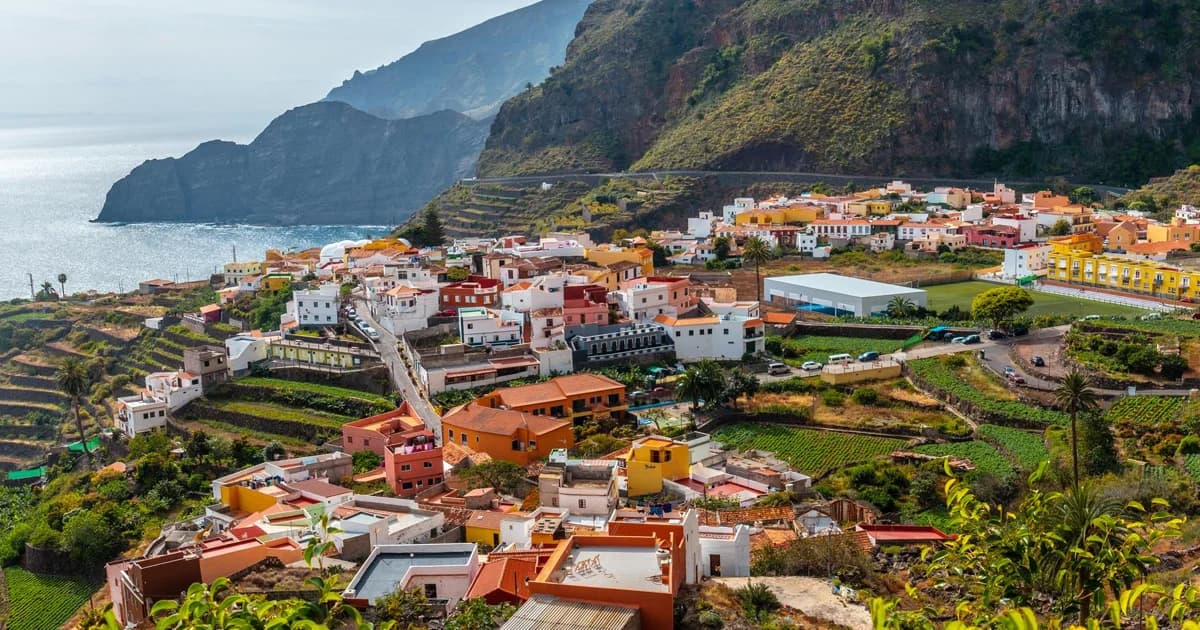
A village of cobbled streets facing Teide, among the loveliest in the archipelago.
Explore →
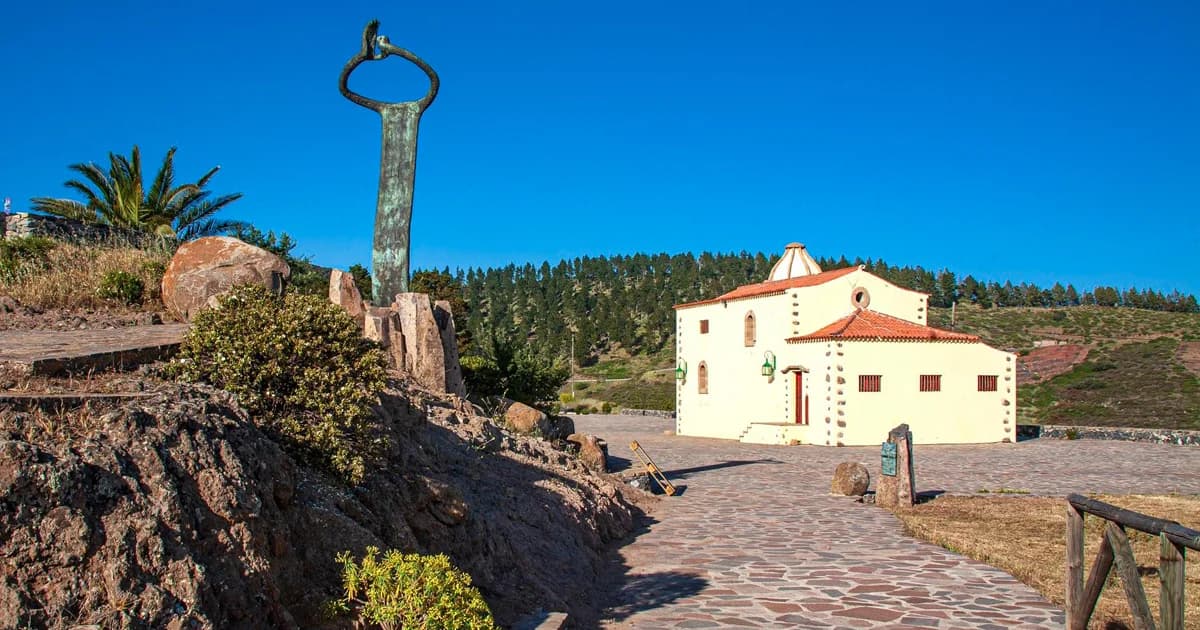
A potters' hamlet where ceramics are still shaped by hand as they were centuries ago.
Explore →
San Sebastián de La Gomera was Christopher Columbus's final stop before crossing the Atlantic in 1492, and again on his voyages of 1493 and 1498. The town preserves the Torre del Conde, a fortress dating from 1447 and one of the oldest military structures in the Canaries, along with the well from which the expedition took on water and the church of La Asunción, where tradition places the last mass before departure.
Agulo sits on a coastal shelf in the north of the island, with Teide dominating the horizon across the water. Its historic centre, with narrow cobbled streets and houses roofed in Arabic tile, is a protected ensemble and among the best preserved in the archipelago. The proximity of Garajonay National Park also makes it a gateway to the laurel forest.
At El Cercado, next to Chipude, a pottery tradition survives that reaches back to pre-Hispanic times. Pieces are built up by hand, without a wheel, from clay and red ochre sourced on the island itself, then fired in open kilns. It is one of the last places in Europe where this technique has continued unbroken.
La Gomera's most singular cultural asset, however, cannot be touched: silbo gomero. This whistled language, which mirrors the structure of Spanish and carries for several kilometres across ravines, was inscribed by UNESCO as Intangible Cultural Heritage of Humanity in 2009 and is a compulsory subject in the island's schools.
Unique Flavors
The gastronomy of La Gomera is very traditional and based on simple but flavorful products. Gofio is one of its most important foods, and appears in many recipes, both savory and sweet. Stews, mojos, cheeses and home-cooked meats are also typical.
One of the best-known elements of Gomera cuisine is almogrote, a paste made from cured cheese, tomato, oil and garlic that is usually spread on bread or served with other dishes. This product is very representative of the island and is part of its culinary identity. Fish and dishes made with simple local ingredients are also common.
The gastronomy of La Gomera reflects a way of life closely tied to the land and tradition. Its recipes are usually passed down from generation to generation, preserving very old flavors. This continuity gives Gomera cuisine special cultural value.
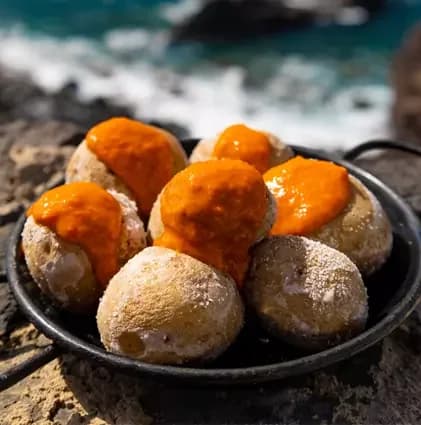

Volcanic Flavor
Most popular
La Gomera is a paradise for nature and adventure lovers.
Must-see places