Iglesia De La Concepcion
Iglesia De La Concepcion
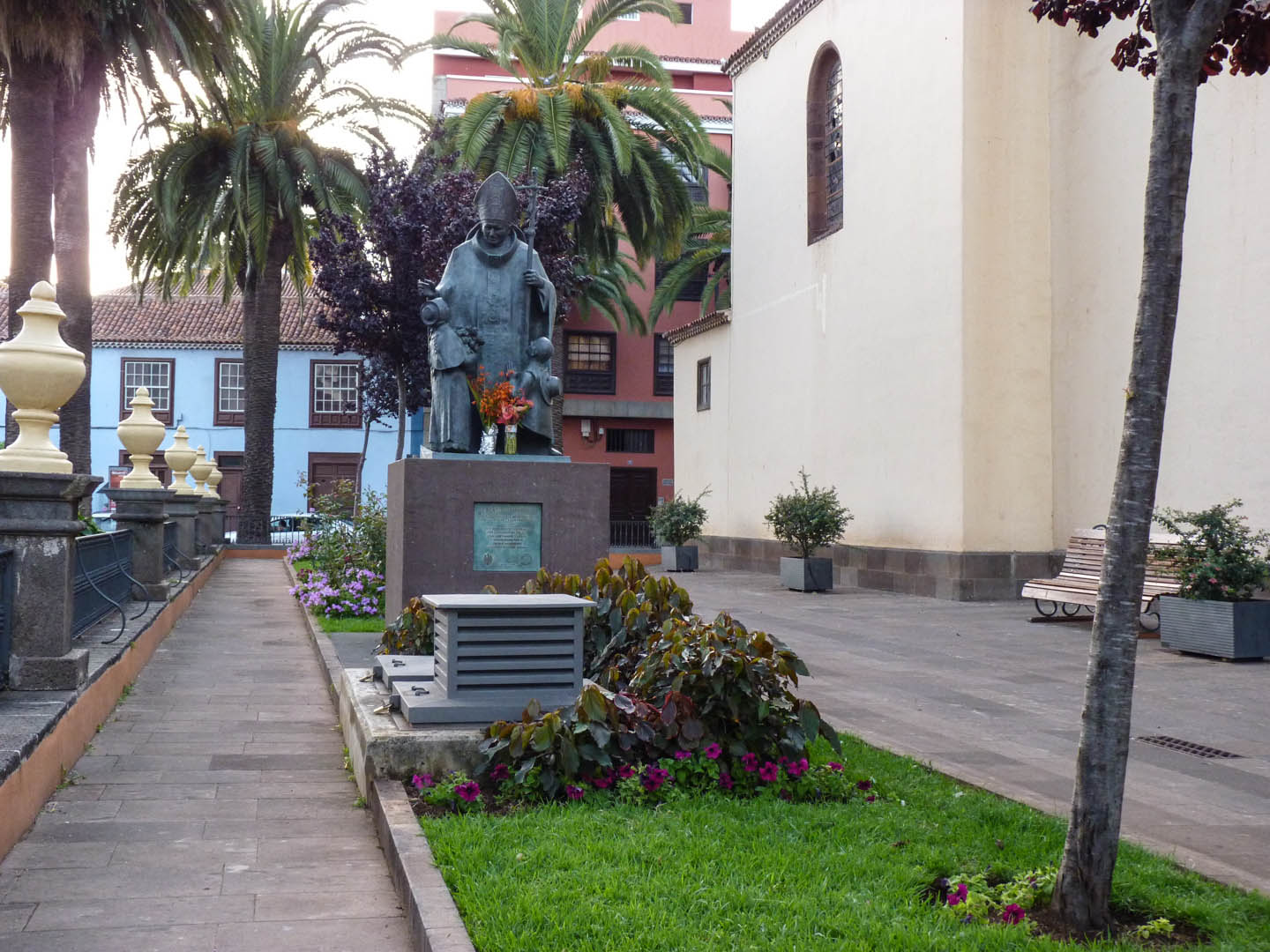
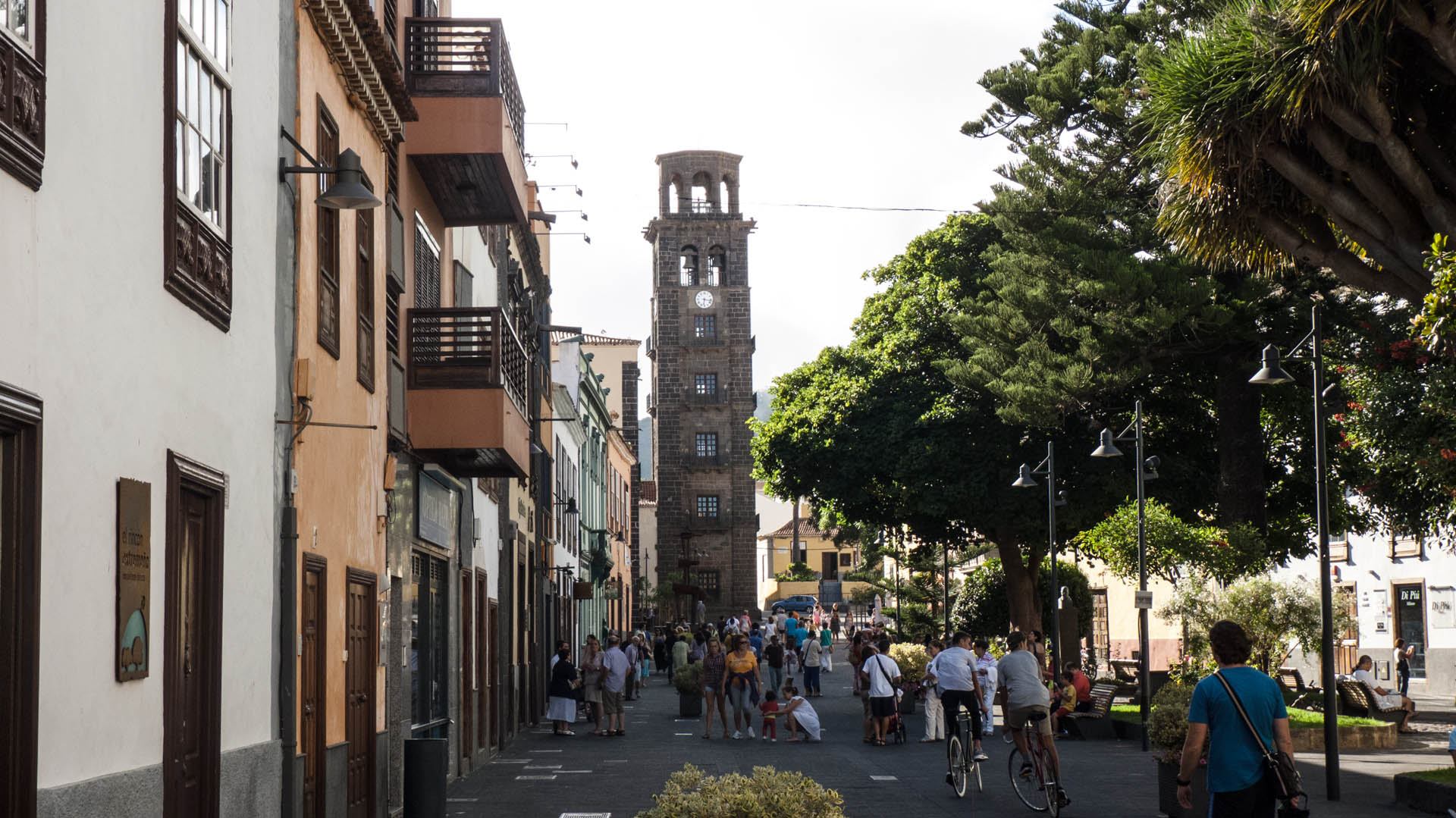
It was the first parish of Ténérife and mother of all which were create from the XVIth century. Adelantado indicated its location on this ground, having celebrated in 1496 the Corpus Christi for the first time to Ténérife there. The oldest of the parochial churches had a location different from the current probably between the street Adelantado and the street Marked with Celada. In 1511, we decided to raise a new temple of three naves, closer to the center of the rising " Villa of Arriba ". During the first 30 years of the XVIth century, the works moved forward very slowly and concentrated on the bedhead of the church. They were finished in 1558, but we there were enlargements over the centuries which will follow. The construction of the tower was also risky. After both constructions, in 1577 and 1630, the definitive one took place from 1694 till 1697. But the bad quality of materials, the insult of weather and the deficiencies in the maintenance of the building oblige a complete rebuilding in 1738 and even later, in 1778, supervised by Diego Nicolás Eduardo. His intervention concentrates on the big chapel. After diverse hazards during the construction, we see in the current events a vast temple of three naves separated by Roman arches on columns with cylindrical barrel in red tuff and big tops with diverse decorations: Gothic bays, vegetation or mascaron. The big chapel was modified towards the end of the XVIIIth century, when we replaced the old by a new space dominated by a ribbed vault. The main facade of the temple, near the Gospel, shows a waisted arc bounded by two columns with smooth barrel. The facade near the Epistole shows a similar drawing, of a characteristic baroque language. The bedhead of the temple was also modified towards the end of the XVIIIth century by Diego Nicolás Eduardo, who introduced neo-classic forms. The tower, stone of grindstone, is the third which had the temple and it was ended in 1697. It constitutes a symbolic element of the church. Executed stone of quarry, with a square basis, it seems topped with a kiosk without big top. On its base is the baptistry, covered by a vault ribbed by Gothic inspiration. The pulpit, absolutely remarkable, a noble wooden cut baroque element at the end of the XVIIIth century, is considered as an incomparable jewel in its kind. Baptismal fonts are of a big historic interest. They are ceramic sévillane of the XVIth century, brought back, as it is said, by the first one Adelantado and were of use to the first baptisms of Guanches de Ténérife. For their sculptural wealth, we have to mention the one of José Luján Pérez in the Chapel of the Very saint Christ; the Christ of the Delivery, the Spanish late Gothic (XVIth century); Saint-Peter and the Immaculate Conception, the last sculpture (by 1849) of the sculptor of Ténérife Fernando Estévez ( 1781-1854 ); the group of the Devotion, Lázaro González (XVIIth century); an image of Saint Joseph (Genoese School of the XVIIth century). Among the pictorial works, we find: famous Saint Jean Évangéliste, of Cristóbal Ramírez, on whom, according to the tradition, we observed exudations of blood in 1648; a big painting of Cristóbal Hernández de Quintana (1651-1725, entitled " Cuadro of tired Á nimas " (Picture of Souls).
Gallery